Your Brain on a Microphone: The Surprising Neuroscience of Karaoke Courage

Let's paint a picture. It's a Tuesday night. You're at a karaoke bar somewhere in Nashville or maybe a tucked-away lounge in Chicago. Your palms are sweating, your friend is shoving a mic into your hand, and the opening bars of Journey's "Don't Stop Believin'" are already scrolling across the screen. You swear you're going to die.
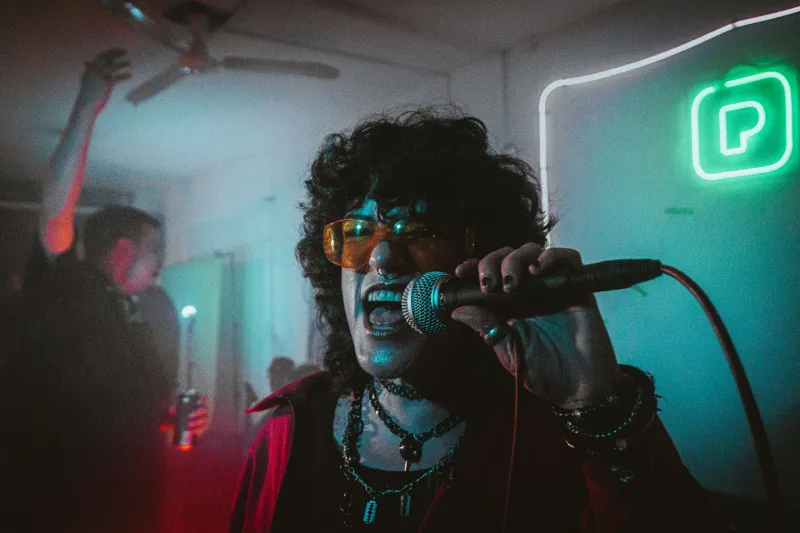
And then — you don't. In fact, somewhere around the second verse, something clicks. Your voice gets louder. Your shoulders drop. A grin spreads across your face that you absolutely did not plan. By the final chorus, you're basically Steve Perry.
What just happened? Science, my friend. Beautiful, bizarre, karaoke-flavored science.
Dopamine: Your Brain's Built-In Hype Man
When you step up to that mic, your brain doesn't just register "singing." It registers performance, social connection, and risk — all at the same time. That cocktail of stimuli triggers a dopamine release that's frankly kind of embarrassing in how good it feels.
Dopamine is your brain's reward chemical. It's what fires when you eat your favorite food, win a game, or — yes — nail the high note on a Mariah Carey song in front of twelve strangers. According to research in music psychology, singing activates the mesolimbic pathway, the same neural highway associated with pleasure and motivation.
"Singing is one of the most holistic activities the human brain can engage in," says Dr. Patricia Henley, a music psychologist based in Los Angeles who consults with performers ranging from Broadway hopefuls to corporate team-building coaches. "You're coordinating memory, motor function, emotional processing, and social awareness simultaneously. The dopamine response isn't just incidental — it's massive."
And the kicker? The reward hits hardest when there's an audience. The social element amplifies the neurological payoff. Karaoke, by design, is basically a dopamine delivery system wearing a sequined jacket.
The Anxiety Paradox: Why Fear Actually Helps You
Here's where it gets counterintuitive. Most people describe pre-karaoke jitters as pure terror. But from a neuroscience standpoint, that anxiety is your brain preparing you to succeed, not warning you to flee.
The physiological arousal you feel — racing heart, heightened alertness, that slightly unhinged energy — is nearly identical to excitement. Researchers at Harvard Business School found that reframing anxiety as excitement actually improves performance in high-stakes situations. Karaoke is, arguably, the highest of stakes (at least emotionally).
Vocal coach Marcus Trent, who has worked with amateur singers in Atlanta and New York for over fifteen years, sees this transformation constantly. "I've had clients who couldn't sing in front of their own reflection walk into a karaoke bar and absolutely own the room. The anxiety doesn't disappear — it converts. It becomes fuel."
That fuel is largely adrenaline and cortisol, which sharpen your focus and temporarily boost your physical capabilities. Your voice, ironically, can actually perform better under mild stress than in a completely relaxed state. So the butterflies aren't your enemy. They're your backup dancers.
Singing as Social Glue (And Why Americans Need It)
America has a loneliness problem. The U.S. Surgeon General declared it an epidemic in 2023, and the data is grim: nearly half of American adults report measurable feelings of isolation. Enter karaoke, which is doing more therapeutic heavy lifting than it gets credit for.
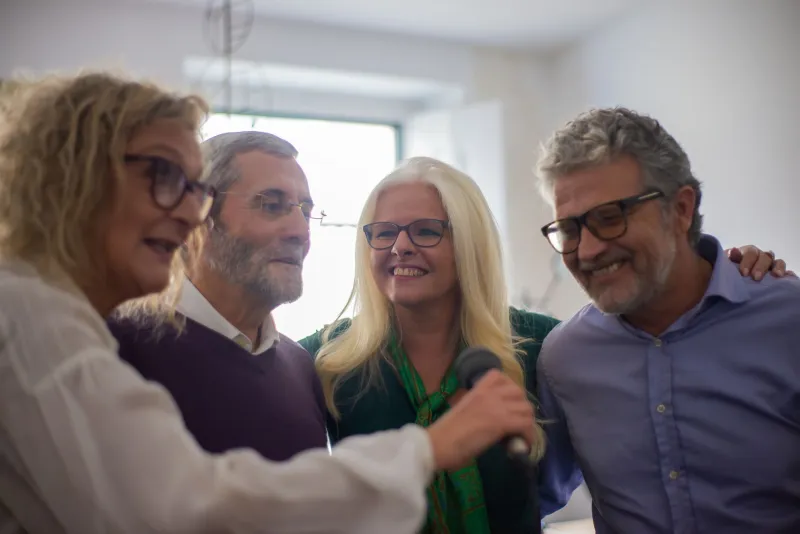
Group singing — even the chaotic, off-key, comedy-of-errors kind that defines most karaoke nights — triggers the release of oxytocin, sometimes called the "bonding hormone." It's the same neurochemical that fires during hugging, laughing, and meaningful conversation. When a room full of people belts out "Sweet Caroline" together (BUM BUM BUM), they are, neurologically speaking, bonding.
"There's a reason karaoke has exploded as a stress-relief activity across all age groups," says Dr. Henley. "It combines the benefits of physical vocal exercise, social connection, creative expression, and controlled vulnerability. That's a therapeutic trifecta most people can't access in a traditional clinical setting — but they can absolutely access on a Friday night with a couple of drinks and a songbook."
And you can access it on your phone, too. Mobile karaoke apps have made the experience portable and personal, meaning the brain benefits aren't limited to bars. Whether you're in your car, your living room, or waiting for a flight at LAX, the mic (metaphorical or literal) is always within reach.
Building Confidence One Terrible Rendition at a Time
Here's what nobody tells you about karaoke confidence: it's cumulative. Every time you grab that mic — even when you crack on the high note, even when you forget the second verse and just mumble something vaguely musical — you're rewiring your brain's relationship with public vulnerability.
Psychologists call this "exposure therapy" in clinical settings. Karaoke calls it Tuesday night. The principle is the same: repeated exposure to a fear-inducing scenario, in a low-stakes environment, gradually reduces the threat response. Your amygdala, the brain's alarm system, learns that singing in front of people does not, in fact, result in death.
Marcus Trent puts it simply: "Every karaoke performance, no matter how rough, is a deposit into your confidence bank. Do it enough times, and suddenly public speaking, job interviews, first dates — they all feel a little less terrifying. You've already survived the karaoke bar. What else is there to fear?"
Pretty compelling argument for downloading a karaoke app and going absolutely feral on some Fleetwood Mac tonight, honestly.
The Takeaway (And It's Not Just the Mic)
Karaoke isn't just entertainment. It's a neurologically rich, psychologically beneficial, socially connective experience that your brain is literally designed to enjoy. The dopamine, the oxytocin, the adrenaline — it's all working together to make you feel braver, happier, and more connected to the people around you.
So next time someone hands you a mic and you feel that familiar wave of "absolutely not," remember: your brain is already rooting for you. The chemistry is in your favor. The crowd is (probably) on your side.
Grab the mic. Belt it out. Anywhere you are.
KTV789 is your go-to destination for karaoke content, song recommendations, and mobile entertainment. Sing loud, have fun — we'll handle the rest.